

Christopher Nolan’s adaptation of The Odyssey was good. I think it demonstrates his best writing in a film in a long time, and despite the film’s attempts at being grounded may seem like it would clash with the story’s high fantasy nature, he manages to execute it in a way that it works well.
Much like Batman before it, The Odyssey initially seems like a story that should have been tackled by a more “artistic” filmmaker, one that can capture the otherworldly universe with deep color, imaginative visuals, and visual and special effects to bring that fantasy world to life.
But much like Nolan turned the gothic noir Batman universe into a grounded legal drama set in Chicago and made it work really well, he told The Odyssey in unassuming real world locations with merely suggestions of the supernatural via old-school practical techniques, and it all flies well together.
Christopher Nolan’s love for doing this demonstrates its own valid and now unique form of cinema, one of “capturing the world and actors on camera” with analog technology, and all the filming techniques, artistic decisions, and production logistical strategies required to make that happen.
The exact opposite film form of that would be George Lucas’ style, where the art is assembled after filming, where they would film in a stage and artists would create the backgrounds and the makeup after the fact. Both are valid film forms and both are cinema, but each end up in a very different feeling film.
In the decades after Lucas invented it when filming the Prequels, it has become the more widespread form of creating movies, not just because of its efficiency, but because of the artistic freedom it gives relative to the budget required to achieve it. Nolan’s retro style however, despite being insanely expensive due to the sheer logistical hurdles that have to be managed to make it happen, is still worth doing for the spectacle of it, which people appreciate for its novelty, even if it does end up in a movie that doesn’t seem on paper as artistic and larger than life.
This doesn’t mean Nolan had little artistic influence over his final product. Quite the opposite, the reason this movie works and why the story resonates is because of his decisions on how to tell the story and what changes he would make to continue the legacy of this oft-told tale into something present audiences would enjoy and appreciate.
Nolan’s interpretation of The Odyssey is as an anti-war story. Odysseus, a Trojan War veteran, who wishes to return home to his family, cannot return, because the Gods decreed he has to atone for the sins he did during the war.
Nate Connolly noted how this was a way to make The Odyssey resonate with American audiences, as the concept of a war veteran did not exist back then. But adapting The Odyssey as part of the “shooting and crying” genre of anti-war story helped ground the movie with morals a modern audience could relate to and understand, as a straightforward adaptation of the story would probably leave a modern audience wondering what’s so interesting about a story of a man who gets home late because the Gods think it’s funny and then kills the men who were going after his wife.
The war movie elements continue to his visceral interpretation of the Trojan Horse story, telling the story from the soldiers perspective inside the horse, and the hardships they faced and sacrifices they took to execute the daring plan. Tying that story to that of breaking Zeus’ Law, where visiting guests are treated as part of the family in case they may be a God in disguise, frames Odysseus’ and his soldier’s role in the Trojan Horse story as that of a terrorist attack on the unsuspecting Troy that he has to atone for.
Christopher Nolan has long been chided for his writing. For all his skills as a filmmaker, his writing has long been cited as a weak point, typically because of his long-winded and overcomplicated storytelling and smashing his audience with themes as brunt as hammers. But he has continually improved his craft, and I think The Odyssey is his best writing to date, so much so I think that’s the best part of this movie.
The strong use of bookends were my favorite part. He added various of them to the movie that weren’t necessarily there on the original story, but to make the story work for a modern story structure, which is the paramount goal of an adaptation. For example, in the original, you meet Odysseus’s dog Argo at the same time he returns and sees him. But in the new one, he introduced Argo before he left so that the audience knows the dog is waiting for him. This makes the ending more poignant and effective, as a regular joe wouldn’t know that dogs may have been big in Greek culture and it wasn’t expected to have a dog waiting for his master.
The whole movie is an exercise in bookends, from the servants knowing who Odysseus really is from small personal stuff only they would notice, to discussions around Zeus’ Law about a God possibly pretending to be a beggar leading into Odysseus returning in the form of one, it helped the story be a lot more satisfying than a more standard and rote adaptation of more conservative versions of the story.
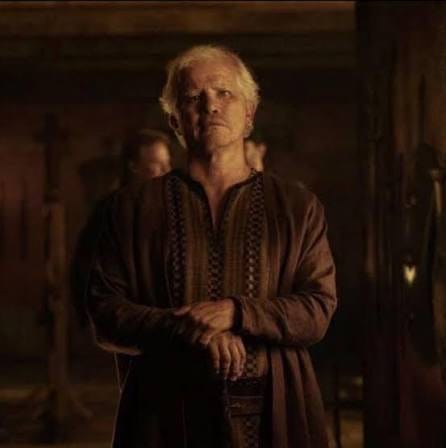
As for the actors, they were all fine. Only real standouts to me were John Leguizamo (he felt like the rock that held the movie together) and Robert Pattison, who did a good job playing a nefarious and slimy villain. Much ado has been made about the casting of this movie, which I agree that there should have been more curly hair and brown eyes in this movie.
Where does this movie stack in the Nolan filmography? This is my personal list with the movies I like better than The Odyssey. I won’t list the ones I think are worse.
- The Prestige
- Oppenheimer
- Dunkirk
- The Dark Knight
- Inception
- Interstellar
- The Odyssey
I think The Odyssey has better writing than Interstellar, but the overall package I felt hit better than the overall package of The Odyssey. The Odyssey is more polished than just about all those movies too, I think Nolan is better at his craft than he ever was before. But why don’t I think higher of The Odyssey?
I think The Odyssey doesn’t fly as high for me because I don’t think Nolan’s style of filmmaking is the right fit for this story. I think this story would have been better realized by a filmmaker more willing to explore a more artistic realization of fantasy.
Even if you take into account that Nolan was specifically going for a more grounded feel to the story, he still did a lot of artistic decisions that failed to achieve that. For example, his world is less colorful than the real life Greek world he tried to recreate. His costumes are plain and boring, the art design is generic Hollywood and not at all realistic to the era, and while the real life locations he shot with IMAX cameras were indeed immersive and sharp, they simply don’t look interesting at all. A beach is still just a beach, whether you shot nearby or in a sensitive location the crew probably should not have been filming in the first place.
The extra brownie points you may have gotten for the massive undertaking of filming in those locations may not really pay off when you watch the movie at home, or as is tradition for Nolan movies, in an airplane screen (which to be fair, I can conform Inception was still absolutely fantastic in an airplane screen).
I am not as excited for the next Nolan experience as I was after watching Oppenheimer, but I will gladly look forward to it and see what he cooks up next.
Comments